
Most guides to hosting a kids painting party start the same way: buy a canvas for every child, trace a design on each one the night before, and hope the paint is dry by the time parents arrive. It works. It is also an evening of tracing, a table of children waiting for instructions, and a row of wet canvases the size of a laptop heading into the back of someone’s car.
🎨 Discover RIIN Art ready-to-paint plaster figurines
Pre-order on WhatsApp, cash on delivery, anywhere in Morocco.
A plaster painting workshop keeps every child busy for about 90 minutes, gives each guest a handmade keepsake to take home, and needs no screen. Order one kit per child plus a spare, paint before the cake so the figurines can settle, and let mixed ages work side by side from age 3.
Why a painting party beats the usual birthday
A good birthday party is not the loudest or the most expensive. It is the one children remember, and few things stay with them like making something with their own hands.
A painting workshop solves three problems at once:
- Everyone is busy. No children drifting off, no squabbles over one toy. Each guest is absorbed in their own figurine.
- The party favor is built in. Every child leaves with something they made, which replaces the usual bag of candy.
- It is screen-free. Parents appreciate it, and nobody asks for the tablet.
Why figurines work better than canvases at a party
The canvas approach runs into three problems that the English-language guides quietly work around.
The blank page. Those guides are right that a blank canvas rarely works with a group of children: half of them freeze, the other half finish in two minutes. Their fix is to trace a design on every canvas in advance. A figurine solves this without the evening of preparation, because the shape is the design. The dinosaur already exists; what it looks like is still entirely the child’s decision.
Mixed ages. A birthday table often holds a 4-year-old cousin and a 9-year-old classmate. A single traced canvas design is too hard for one and too easy for the other. On a figurine, the youngest covers the large areas and the older ones take on eyes, textures and gradients, at the same table, with the same kit. We cover how that plays out in our guide on how to paint a plaster figurine.
Getting it home. A small figurine goes home in a paper bag or its own box. It will still need a full day to cure completely, so wrap it loosely - but it will not smear across a car seat.
How many kits to order
The rule is simple: one kit per child. Each guest needs their own figurine, their own paints and their own brush. Shared paint pots are where most party arguments start.
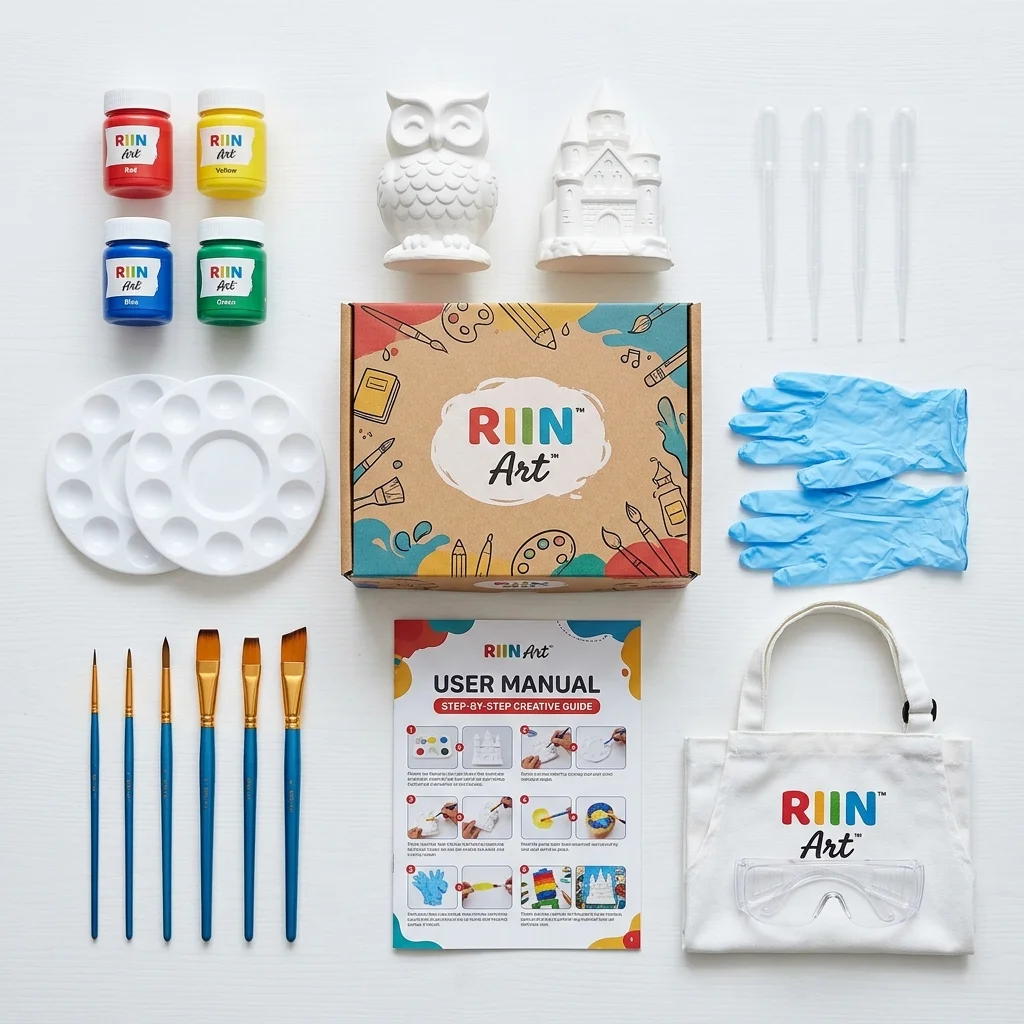
The Discovery Kit is the natural unit for a party: three pre-molded figurines, four washable paints and a brush. In practice, each child paints one figurine at the party and takes the other two home to keep going, which stretches the party into the following week.
- Small group (4 to 6 children): 6 kits, ideal for a party at home.
- Medium group (8 to 10 children): add one or two spare kits for last-minute guests.
- Large group (12 or more): split into two tables so the adults can actually help.
Always order one kit more than the number of confirmed guests. There is almost always a younger sibling or a cousin who turns up on the day, and a child with nothing to do is how a party goes sideways.
If you are simply giving a kit as the birthday present rather than hosting the party around it, our guide to choosing a creative gift for kids covers which box to pick.
A ready-to-run 90-minute plan
This plan has been tested with groups aged 5 to 10. Younger children follow it well with a hand from an adult.
Step 1: Welcome and setup (15 minutes)
Seat the children around a large table covered with a plastic cloth or newspaper. Give each one an apron or an old T-shirt. Introduce the activity with some energy: today, everyone is making their own masterpiece.
Step 2: Choosing a figurine (10 minutes)
Bring out the figurines and let each child pick theirs. This moment matters more than it looks. Choosing is what makes the activity personal, and it is what gets the brushes moving.
Step 3: Painting (45 minutes)
This is the heart of the workshop. Hand out the paints and brushes and let them work. Walk around to help the youngest with how much paint to load or how to mix a color, but resist the urge to do it for them.
Step 4: Drying and display (15 minutes)
While the figurines settle, it is time for cake and candles. Painting first and eating second is the most useful piece of timing advice, and most painting-party guides land on it too. At the end, each child leaves with their creation wrapped up. With the Classic Kit or the Gift Box, which include magnets, it can even become a fridge magnet once it is fully dry.
Hosting tips that make the difference
- Unpack the figurines in advance and set them out by table, so each child finds theirs in seconds on the day.
- Protect the space properly: plastic tablecloth, old T-shirts, wipes within reach. The paints wash off with water, but it is easier not to test that on the sofa.
- Give children elbow room. When in doubt, add a table rather than squeezing everyone closer.
- Appoint a workshop lead: one adult who guides, encourages and takes photos.
- Set up a drying spot: a shelf or windowsill where finished pieces can line up, out of reach of busy hands.

Above all, take photos. The other parents will love receiving a picture of their child proudly holding what they made, and it extends the party well beyond the afternoon.
What reassures the other parents
A painting workshop ticks the boxes parents care about: a group activity that channels energy, a creative hobby that builds fine motor skills, and a party with no screens - the same reasons it works on an ordinary afternoon, as we explain in our guide to screen-free activities that hold at home.
On safety, the plaster is natural, free of additives and non-toxic, and the paints wash off fingers and clothes with water. The kits work from age 3: the youngest paint the large areas with a hand from an adult, the older ones take care of the details.
It is also an economical party. Compared with a play center or a hired entertainer, a kit per child costs less, and every guest still goes home with a keepsake they made. If you are comparing formats and budgets, our comparison of craft kits for kids in Morocco sets them out side by side.
Kits are ordered on WhatsApp with cash on delivery, anywhere in Morocco. Leave yourself a few days of margin before the party date.
Frequently asked questions
How many kits do I need for a birthday party?
One kit per child, plus one spare for the guest nobody told you about. For a party of 8 children, order 9 kits. Each child then has their own paints and brush, which is what prevents most of the arguments at the table.
What age is a plaster painting party suitable for?
From age 3. For a group, ages 5 to 10 are the easiest to run, but younger children join in well with an adult alongside. Because every child paints their own figurine at their own level, mixed ages work better than with most party activities.
How long does the workshop last?
About 90 minutes from arrival to cake. The painting itself takes around 45 minutes, which gives every child enough time to finish their figurine.
Will the figurines be dry enough to take home?
Dry enough to carry, not fully cured. Plan the painting before the cake so the figurines get time to settle, then send them home loosely wrapped with a note to leave them for a full day before handling much.
Article by the RIIN Art team - Casablanca.